On the phone
Real screens, in Normal — the setting that shows you the map and the ball.
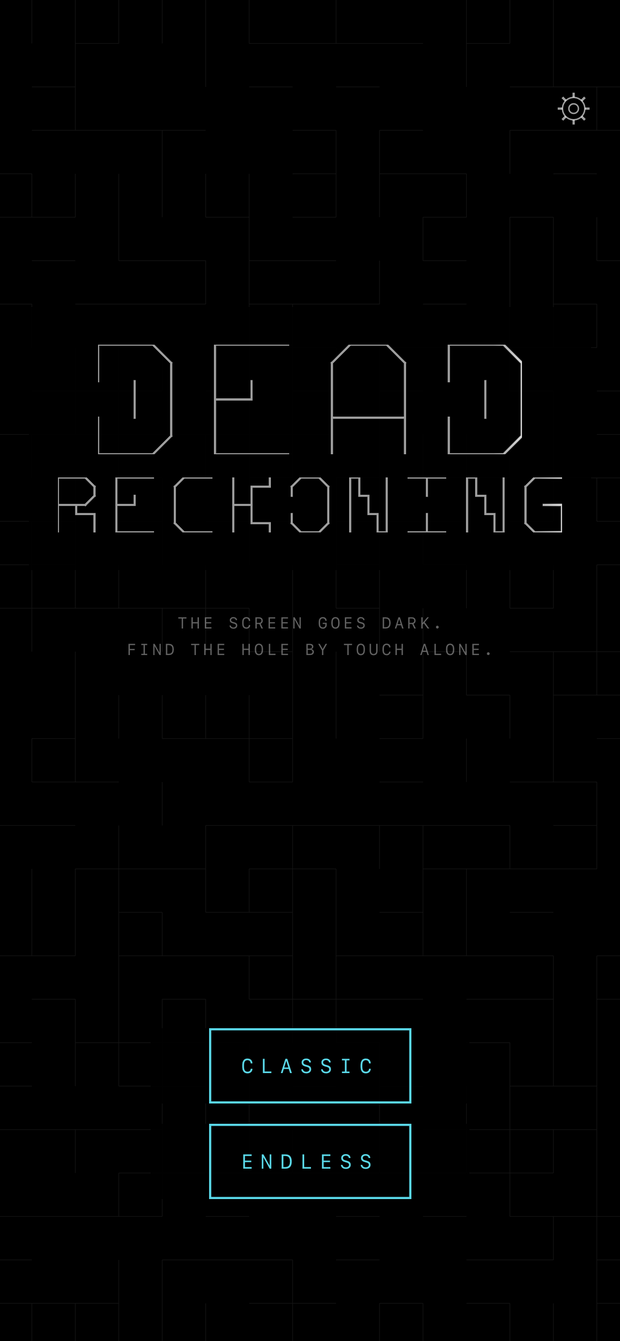
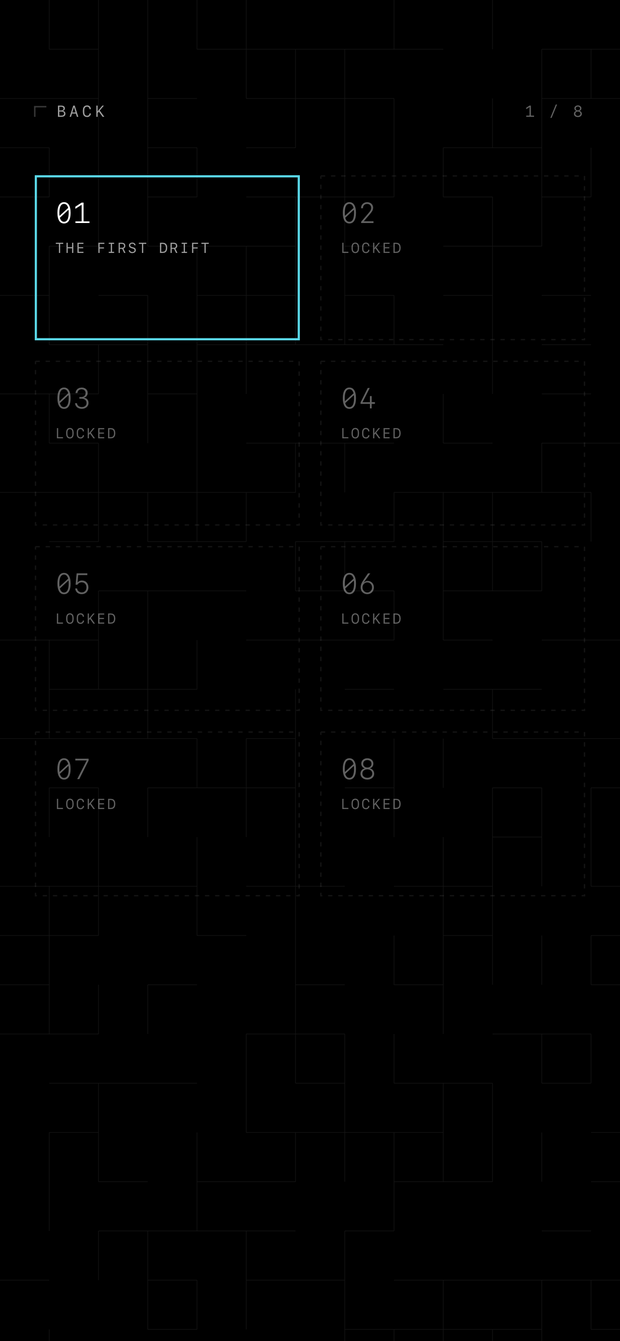
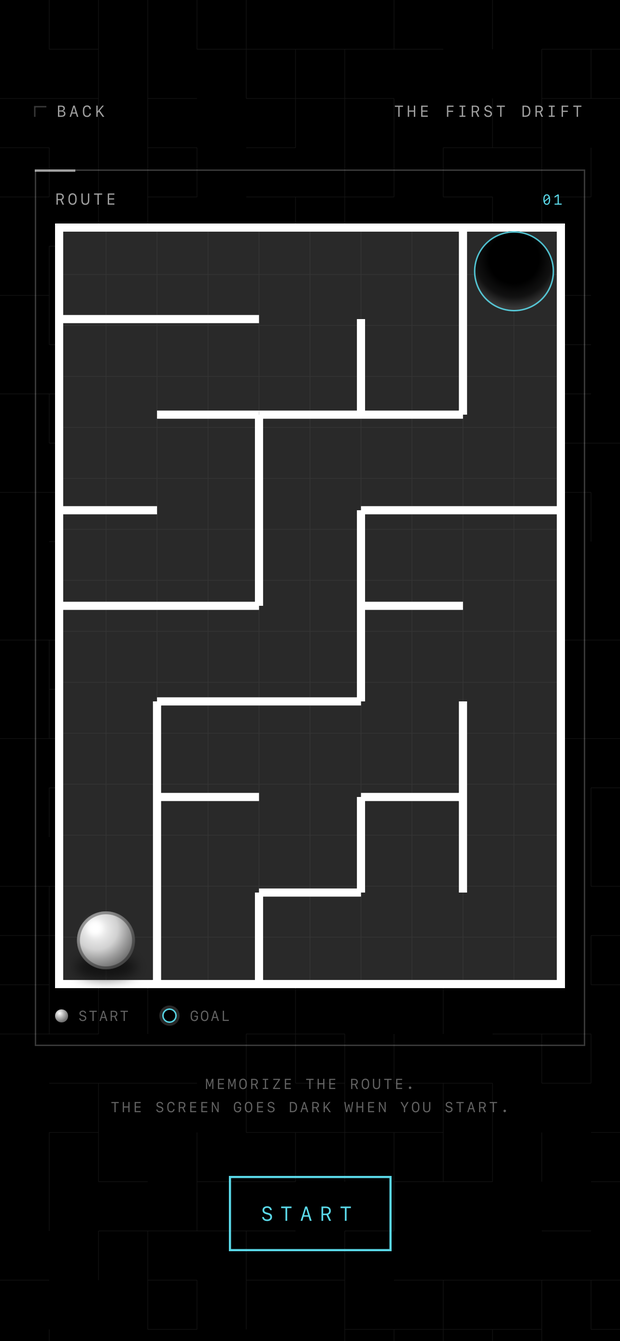
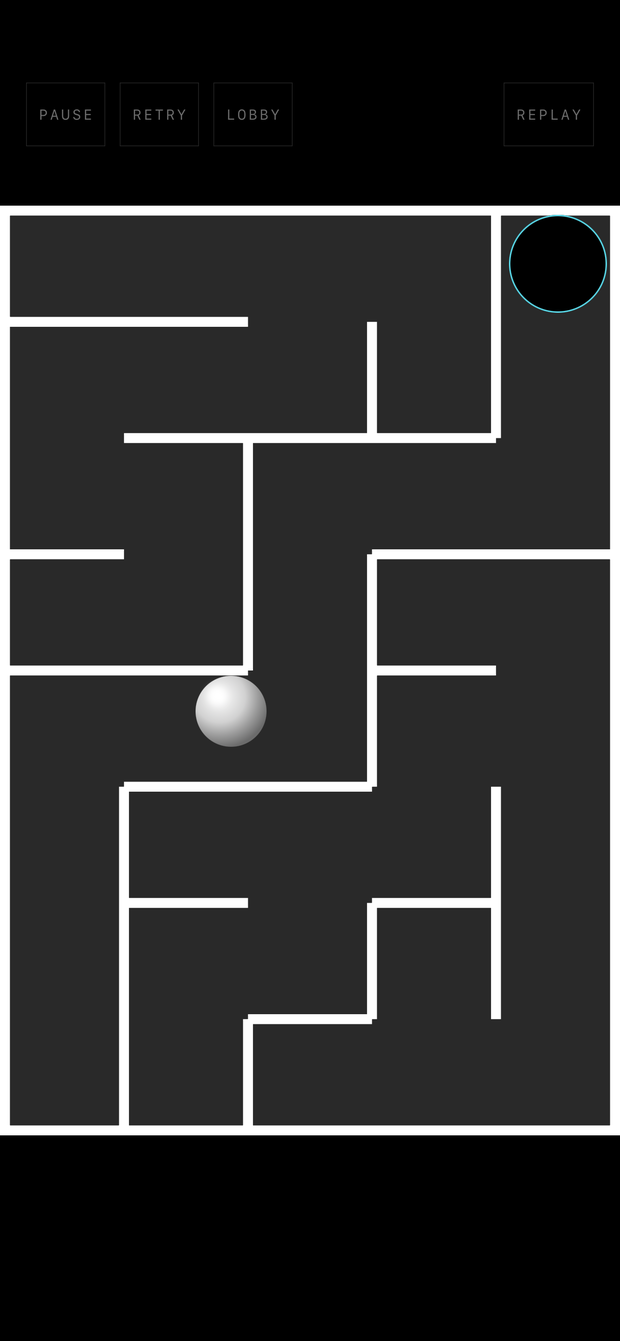
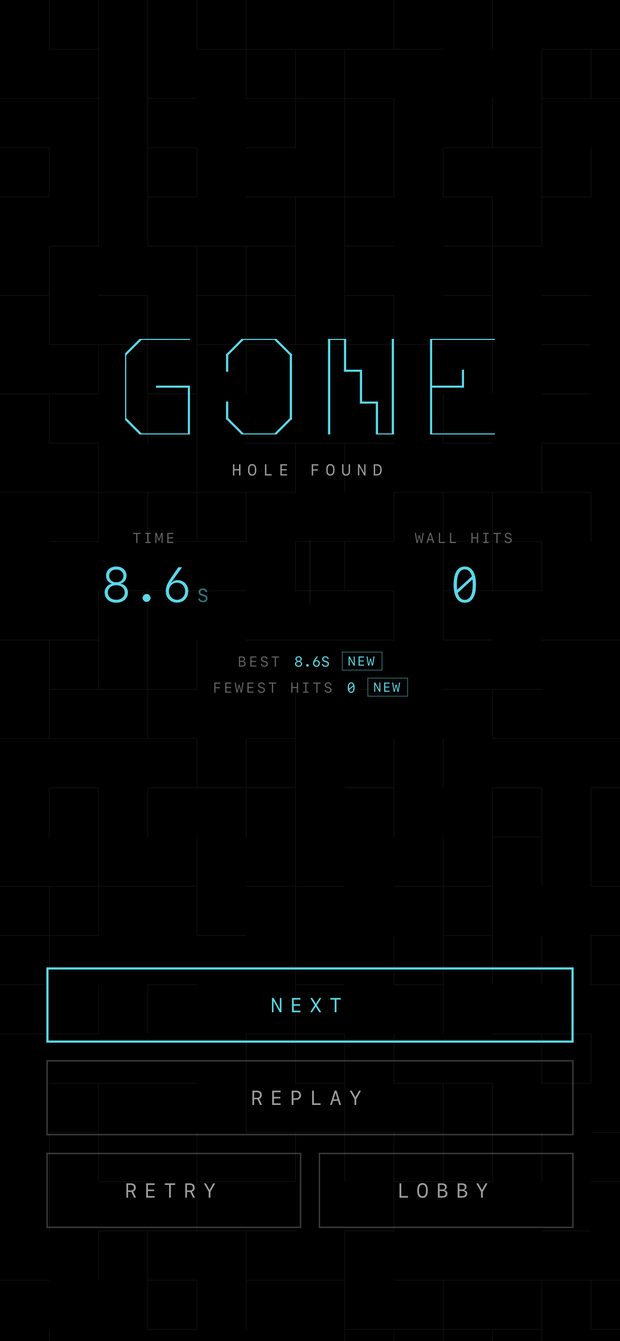
Tilt the phone and it rolls. You navigate by vibration: a hum that tracks your speed, a click when you hit a wall, a scrape when you slide along one. Everything happens on your device. Nothing is sent anywhere, because there is nothing to send.
The screen tells you nothing, so the vibration has to tell you everything. There are three of them and they are built to be impossible to confuse. Rolling is a low hum that gets stronger and brighter the faster you go. Hitting a wall is one short, sharp click. Sliding along a wall is a rough scrape laid over the hum.
The fourth signal is silence. If you feel nothing at all, the ball has stopped, and stopping in the dark is its own kind of lost. A light graze does not register — only a real knock does — so the clicks you feel are ones worth counting.
A wall does not bounce you off. It removes the part of your speed heading into it and leaves the part running along it. The ball keeps moving, now travelling down the wall instead of away from it.
That is why leaning into a wall is the safest way to cross a dark room: you stay stuck to it, the scrape tells you it is still there, and the moment the scrape stops you have reached a corner. Walls are the only landmarks you get.
Since walls are the only thing that can tell you where you are, a maze with fewer of them is a harder maze. The first levels are corridors — hard to get lost in, and they are there to teach your hand what each feeling means. Then come corners and forks you have to hold in your head.
The last two open out. There are rooms with almost nothing in them, where you push off from a known wall and cross on momentum and nerve, hoping to meet something solid on the far side. The hole makes no sound as you near it. There is no warmer-colder. You find it or you do not.
Playing on a black screen is what this was built for, but it is a steep place to start, so it is not where you start. There are three settings and you can change them whenever you like. The levels, the records and the unlocking work the same way in all three.
Map and ball visible. An ordinary tilt maze, and the place to begin.
The ball stays. The map goes. You know where you are, not what is around you.
A black screen and your hands. This is the game as it was meant to be played.
Endless uses one large maze where every part connects to every other part. Each round puts the start and the hole somewhere new, and never close together, so there is no route to learn — only the same skill, applied cold. It counts how many you find in a row.
Replay is how you find out what actually happened. After a win, the map comes back lit and your ball retraces the run at double speed, with every click and scrape landing exactly where it landed the first time. The wandering you did in the dark, with the walls finally visible around it.
Real screens, in Normal — the setting that shows you the map and the ball.
Shorter than the list of what it does, and more useful.